


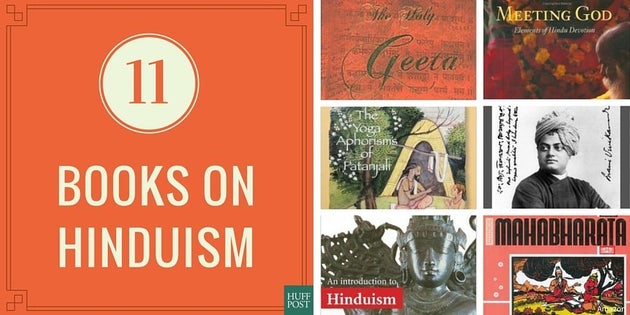
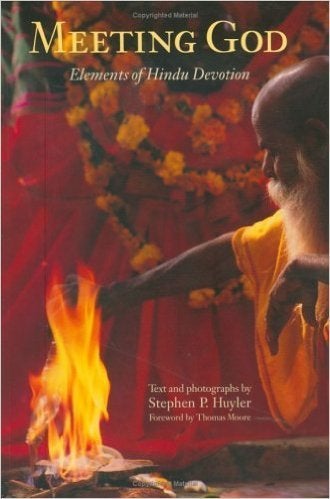
“The author provides descriptions of the many devotional rituals that occupy Hindus as they seek darshan, seeing and being seen by God… Using stories and photographs, Huyler describes the elements of public worship in a Hindu temple, the rituals accompanying worship in the home, the practices surrounding community festivals, processions that honor specific deities and the coming-of-age ceremonies that mark adolescence and old age. Photos grace every page: 200 in all, gorgeous full-color depictions of temples, household shrines, statuary of deities, sacred sites such as the Ganges River and people engaged in particular ritual activities and processions. Huyler’s riveting prose and lavish photos bring Hinduism and its practices to life in all their richness and diversity.”– Publishers Weekly

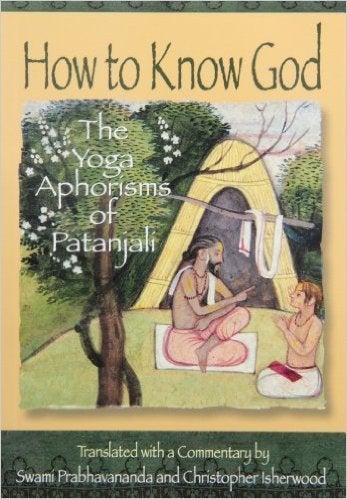 “The Yoga Aphorisms of Patanjali is a major work on the practice of yoga and meditation. Learn through these aphorism how to control your mind and achieve inner peace and freedom. Although these methods were taught over 2000 years ago, they are as alive and effective today as they have ever been. This translation draws on the inspired commentary from both Swami Prabhavananda and Christopher Isherwood.” — Vedanta Press & Catalog 6
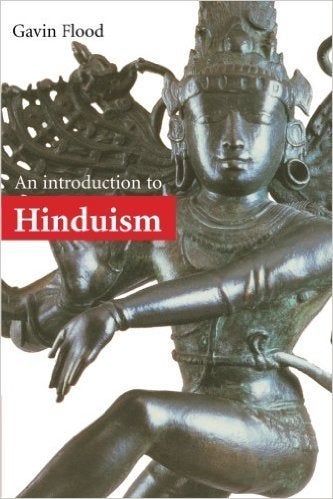 “This book provides a much-needed thematic and historical introduction to Hinduism, the religion of the majority of people in India. Dr. Flood traces the development of Hindu traditions from ancient origins and the major deities to the modern world. Hinduism as both a global religion and a form of nationalism are discussed. Emphasis is given to the tantric traditions, which have been so influential; to Hindu ritual, more fundamental than belief or doctrine; and to Dravidian influences. It introduces some debates within contemporary scholarship.” — Cambridge University Press
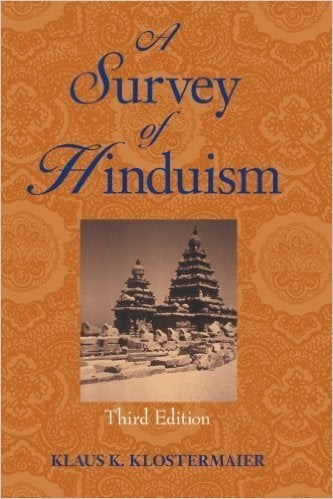 “Instead of dividing Hindu history into periods, Klostermaier arranges it thematically, tracing the parallel histories of the major sub-traditions. He devotes individual chapters to the histories of early Vedic religion, Vaisnavism, Saivism, Saktism, Hindu philosophy, and modern Hinduism. This approach has several advantages. First, by focusing on one tradition at a time, he reduces the confusion that often arises from the complex, intertwining nature of Hinduism, allowing the reader to grasp the most immediate influences on a particular tradition. Second, because the histories of all these traditions are interrelated, the chapters often overlap in their coverage. This repetition puts the material in a new light by applying it in different contexts. For example, in describing the four Vedas in each chapter, the author shows how the same texts have been used for different purposes by the various traditions.” — ISKCON Communications Journal 8
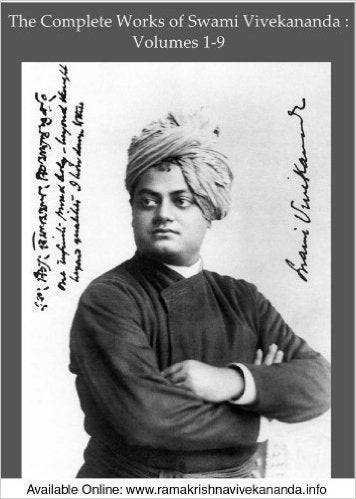 “Born in the Datta family of Calcutta, the youthful Vivekananda embraced the agnostic philosophies of the Western mind along with the worship of science. At the same time, vehement in his desire to know the truth about God, he questioned people of holy reputation, asking them if they had seen God. He found such a person in Sri Ramakrishna, who became his master, allayed his doubts, gave him God vision, and transformed him into sage and prophet with authority to teach. After Sri Ramakrishna’s death, Vivekananda renounced the world and criss-crossed India as a wandering monk. His mounting compassion for India’s people drove him to seek their material help from the West. Accepting an opportunity to represent Hinduism at Chicago’s Parliament of Religions in 1893, Vivekananda won instant celebrity in America and a ready forum for his spiritual teaching… His lectures and writings have been gathered into nine volumes.” — Vivekananda.org
 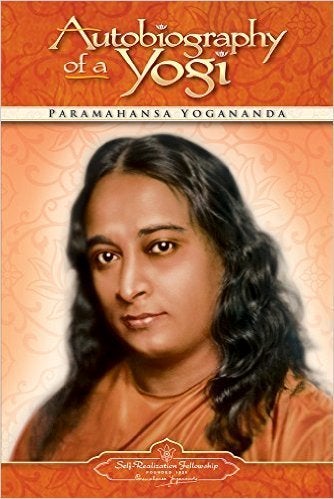 “Yogananda is best known for his groundbreaking memoir, ‘Autobiography of a Yogi.’ It has sold well over four million copies since its publication in 1947, and I suspect it has been read by two or three times that many, because it is the sort of book people lend to their friends. This was especially true in the 1960s and ’70s, when Baby Boomer seekers were thirsty for Eastern wisdom and couldn’t afford the five bucks to buy the AY, as it has come to be known… The AY prompted more Americans to explore Indian spirituality than any other text.” — Philip Goldberg, The Huffington Post
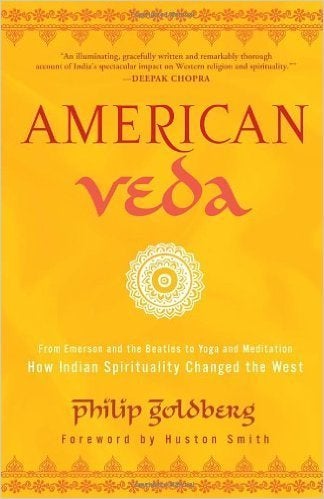 “This is a very readable history of Hinduism’s influence on the United States. Beginning with Ralph Waldo Emerson’s discovery of the Bhagavad Gita in the early 1800s, Philip Goldberg traces what might be called “the Hindu Connection” to American life and thought right down to the present time.On the way, he gives extensive treatment to some of the famous and not-so-famous Hindu teachers who have graced American shores. Swami Vivekananda gets an entire chapter (“The Handsome Monk in the Orange Robe”). So do Paramahansa Yogananda (“The Yogi of the Autobiography”) and Maharishi Mahesh Yogi (“ Maha Mass Media”). The circus that surrounded the Beatles’ 1968 visit to the Maharishi’s ashram in Rishikesh is described in colorful detail. For better or for worse, that iconic event represented the peak of American interest in Hinduism to date… The book is comprehensive, detailed, and well researched.” —American Vedantist
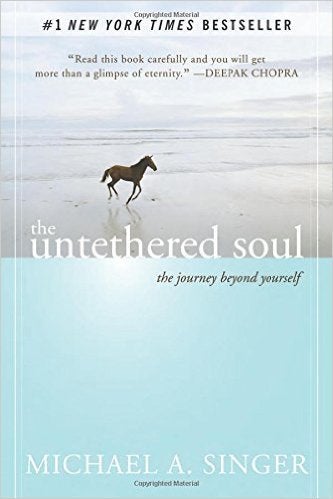 Although this book isn’t explicitly about Hinduism, it does explore aspects of the religion’s spirituality, according to USC’s Varun Soni. “What would it be like to free yourself from limitations and soar beyond your boundaries? What can you do each day to discover inner peace and serenity? … Whether this is your first exploration of inner space, or you’ve devoted your life to the inward journey, this book will transform your relationship with yourself and the world around you. You’ll discover what you can do to put an end to the habitual thoughts and emotions that limit your consciousness. By tapping into traditions of meditation and mindfulness, author and spiritual teacher Michael A. Singer shows how the development of consciousness can enable us all to dwell in the present moment and let go of painful thoughts and memories that keep us from achieving happiness and self-realization.” — UntetheredSoul.com