


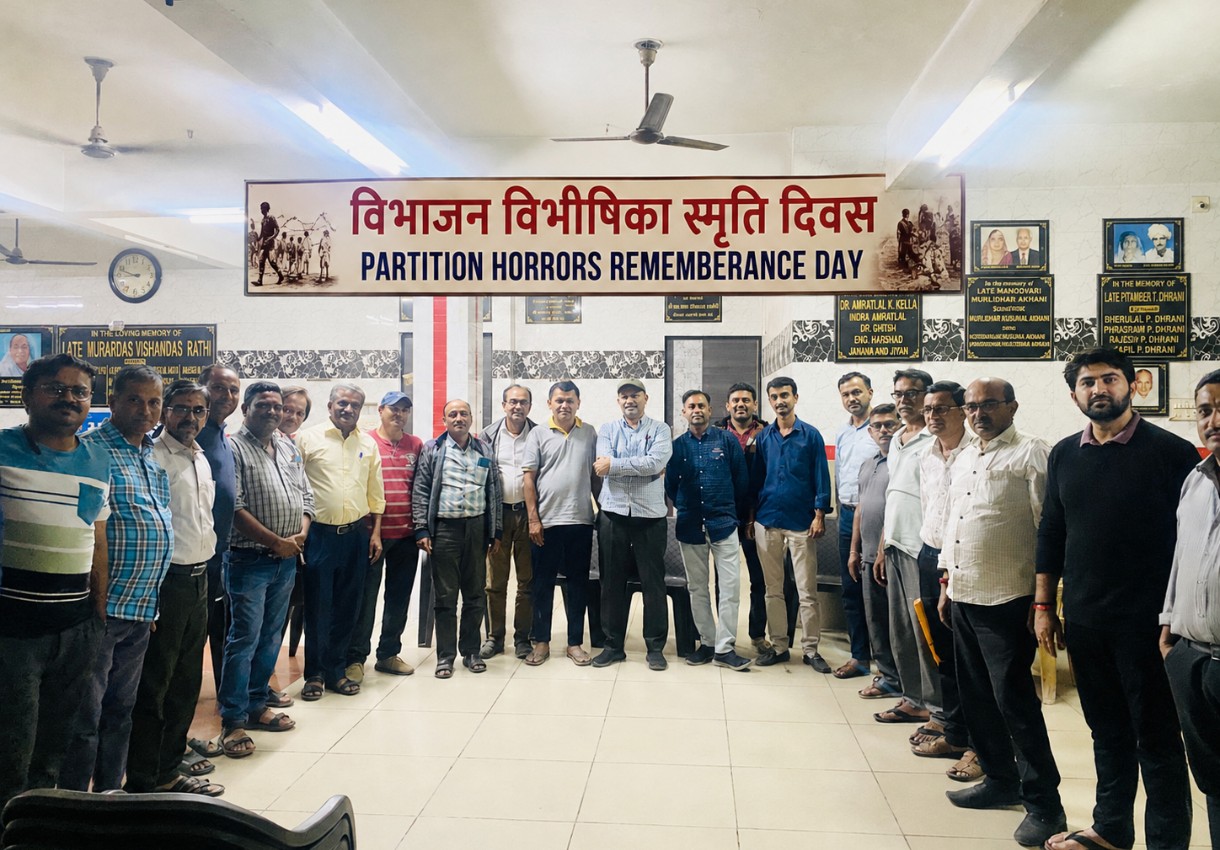
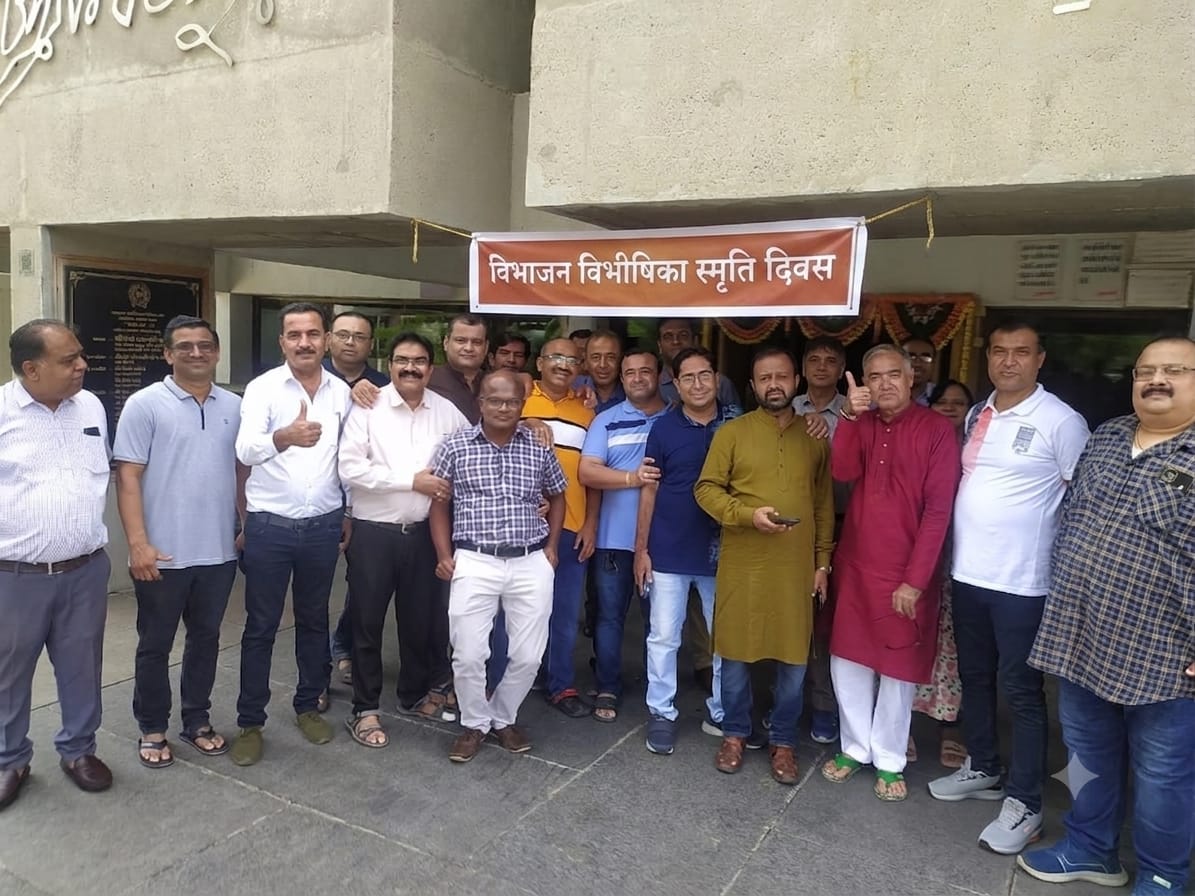
The declaration of 14 August as Partition Horrors Remembrance Day by Honourable Prime Minister Shri Narendrabhai Modi in 2021, followed by the notification issued by the Ministry of Home Affairs, stands as a historic tribute to the millions of innocent people who suffered during the Partition of India in 1947. It accorded long-overdue national recognition to the pain, sacrifice, displacement, and loss endured by countless families whose lives were irreversibly altered by one of history’s greatest humanitarian tragedies. Pak Hindu migrants held a meeting and thanked Honourable Prime Minister Shri Narendrabhai Modi for the declaration of Partition Horrors Remembrance Day.
For the persecuted Hindu minorities of Pakistan, however, the tragedy of Partition did not conclude in 1947. Over the last eight decades and across four generations, countless families have continued to endure religious persecution, targeted violence, discrimination, forced conversions, social exclusion, destruction of places of worship, and repeated displacement. While many sought refuge in India in search of safety and dignity, numerous families continue to remain vulnerable across the border.
The Government of India has demonstrated exceptional compassion by introducing several landmark initiatives, including the Long Term Visa (LTV) system, educational support, humanitarian relief, citizenship under the Citizenship (Amendment) Act (CAA), and various rehabilitation measures. These initiatives have transformed thousands of lives and reaffirmed India's civilisational commitment towards persecuted minorities. The next logical and historic step is to institutionalise these efforts through a comprehensive National Rehabilitation Policy for Persecuted Hindu Migrants, supported by a dedicated implementation mechanism.
Key Recommendations
1. Establishment of a National Rehabilitation Department (Single Window System)
A dedicated National Rehabilitation Department should be established as the nodal authority for all matters relating to persecuted Hindu migrants. This department should function as a single-window system coordinating visa and immigration matters, Long Term Visas, citizenship applications, education, healthcare, employment, housing, social welfare, legal assistance, and rehabilitation. Centralising these services will eliminate procedural delays, reduce administrative complexities, improve coordination among ministries, and enable migrant families to rebuild their lives with
dignity, security, and confidence.
2. Humane and Compassionate Visa & Long-Term Visa Policy
Indias humanitarian approach should be strengthened through a compassionate and time-bound visa policy for persecuted families. Visa applications should be processed within defined timelines, with priority accorded to women, children, senior citizens, victims of persecution, medical emergencies, and families seeking reunification. Long Term Visas of ten years should be granted to permanent settlers to provide long-term stability and reduce repetitive renewals. Multi-entry visas should be introduced to facilitate divided families maintaining familial ties. Additionally, the Government may consider reviving a migration permit system similar to the historic "Lal Permit", allowing permanent migration of genuinely persecuted families seeking refuge in India.
3. Simplified and Time-Bound Citizenship Procedures
Citizenship represents the ultimate assurance of dignity and belonging. The process should therefore be transparent, accessible, and completed within fixed timelines. Procedural reforms should simplify applications involving expired passports and travel documents, address documentation difficulties faced by minor children and children born in India, and provide special provisions for long-pending migrant families, including those who migrated from Chhachhro after 1971. Every authority involved in processing citizenship applications should adhere to clearly prescribed timelines to ensure that
deserving applicants are not subjected to prolonged uncertainty.
4. Livelihood, Agricultural Rights and Economic Rehabilitation
True rehabilitation extends beyond legal status and requires sustainable economic self-reliance. Since many persecuted migrant families have traditionally depended upon agriculture and livestock rearing for generations, they should be permitted to purchase agricultural land and continue farming in India. Access to land ownership, agricultural schemes, livestock support, skill development, entrepreneurship assistance, and employment opportunities will empower families to become self- reliant contributors to India's economy while preserving their traditional occupations and cultural heritage.
5. Women and Child Development
The safety, dignity, and future of women and children have often been the primary reasons compelling persecuted families to migrate. Accordingly, rehabilitation policies must place special emphasis on their welfare. Official facilitation should ensure timely admission of children into schools, educational assistance for girl students, access to Central and State welfare schemes, scholarships, nutrition and healthcare programmes. Opportunities for higher education should include age relaxation wherever migration-related disruptions have affected academic continuity. Vocational training, skill development initiatives, and special admission opportunities in premier
educational institutions should be provided to deserving students to help them realise their full potential and become active participants in nation-building.
6. Recognition and Integration of Migrant Doctors
Hundreds of highly qualified doctors who served society in Pakistan migrated to India because of religious persecution. Their knowledge and professional experience constitute a valuable national resource. Appropriate legal and regulatory provisions should enable the National Medical Commission to grant permanent registration through suitable exemptions wherever justified. Postgraduate medical qualifications earned abroad should receive appropriate recognition, and eligible Long Term Visa holders should be permitted to appear for the Foreign Medical Graduate Examination (FMGE), NEET-PG, and other postgraduate entrance examinations, enabling them to
contribute meaningfully to India's healthcare system.
7. Professional Registration Facilitation for Skilled Migrants
The rehabilitation framework should recognise that migrants include doctors, dentists, nurses, pharmacists, advocates, architects, engineers, accountants, teachers, and other qualified professionals whose expertise can significantly contribute to India's development. A coordinated mechanism should therefore be established to facilitate registration before statutory professional bodies such as the National Medical Commission, Bar Council of India, National Dental Commission, Indian Nursing Council, Pharmacy Council of India, Institute of Chartered Accountants of India (ICAI), Council of Architecture, AICTE, Association of Indian Universities (AIU), and other competent regulatory authorities. Such facilitation would enable qualified professionals to resume their careers without unnecessary procedural obstacles.
8. Expedited Citizenship for Skilled Professionals
Many statutory professional registrations require Indian citizenship before an individual can legally practise. Consequently, skilled migrants often remain unable to contribute despite possessing valuable qualifications. Suitable legal provisions may therefore be introduced to provide expedited citizenship under Section 6(1) of the Citizenship Act, 1955 (Naturalisation) by reducing the minimum residency requirement to one year for eligible persecuted professionals. Early citizenship would enable them to serve society immediately, strengthen India's economy, address shortages of skilled professionals, and accelerate their complete integration into national life.
Conclusion
Partition inflicted one of the greatest humanitarian tragedies in human history. Although history cannot be rewritten, its continuing consequences can certainly be addressed through compassion, justice, and visionary governance. The Government of India has already taken remarkable and historic initiatives to restore dignity, security, and hope to persecuted Hindu migrants through humanitarian visa policies, Long Term Visas, educational support, citizenship under the Citizenship (Amendment) Act, and rehabilitation measures. The time has now come to consolidate these efforts by adopting a comprehensive National Rehabilitation Policy, supported by a dedicated National Rehabilitation Department, ensuring that every persecuted family receives timely assistance, equal opportunity, legal protection, economic self-reliance, and a dignified future. The pain of Partition can never be erased from history, but its continuing suffering can be significantly reduced through a compassionate, comprehensive, and institutional rehabilitation framework. Such a policy will truly fulfil the spirit of Partition Horrors Remembrance Day by transforming remembrance into rehabilitation, compassion into public policy, and historical sacrifice into an enduring national responsibility.This version reads like a formal Government of India policy memorandum or white paper, with each recommendation developed into a coherent explanatory section while retaining all of your original proposals.
Source: World Hindu News